Influencer Marketing in the USA: What Brands Need to Know in 2026
By BookTheCrowd · · Insights
US brands are pouring billions into creators, but the rules are stricter and the competition is fierce. Here's how to run influencer marketing in the USA in 2026: platforms, costs, FTC disclosure rules and how to find creators who actually sell.
If you sell anything in the United States right now, you've probably felt it. Paid social is getting more expensive, ad blockers are everywhere, and people scroll past anything that looks like an ad.
What they *don't* scroll past? A creator they already follow, talking about something they actually use.
That's why US brands are spending more on creators every year. EMARKETER estimates US influencer marketing spend passed $10 billion in 2025, and it's still climbing. Big brands, small Shopify stores, local dentists, SaaS startups: everyone is in.
So how do you stand out, stay legal and actually get results? Let's walk through it.
Where US Audiences Are Watching
- Instagram: still the workhorse for fashion, beauty, fitness, home, food and lifestyle.
- TikTok: massive for discovery, trends and impulse buys, especially under 35. TikTok Shop has turned many creators into full-time sellers.
- YouTube: the best for in-depth reviews, tech, gaming, finance and "how to" content. YouTube videos keep getting views for years.
- Pinterest: quietly powerful for home, wedding, recipes and DIY.
- LinkedIn: growing fast for B2B creators and thought leaders.
The smartest US campaigns don't pick one. They use short video for reach and YouTube or blogs for search.
The FTC Rules (Please Read This Part)
The Federal Trade Commission (FTC) is serious about influencer disclosure, and brands can be held responsible, not just creators.
The basics:
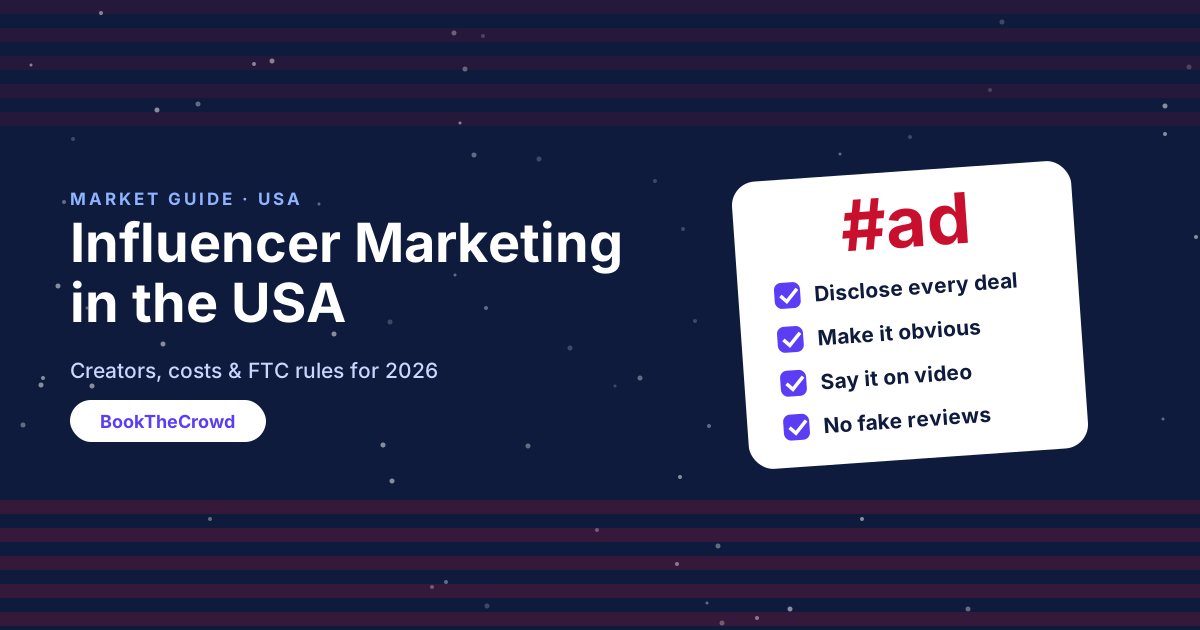
- Disclose every material connection. Paid post, free product, affiliate link, discount, family member: all of it counts.
- Make it clear and obvious. "#ad" or "Paid partnership with [Brand]" at the start, not hidden after 30 hashtags.
- Say it in the video too. For TikTok, Reels and YouTube, the disclosure should be spoken or shown on screen, not only in the caption.
- No fake reviews. The FTC's rule on fake reviews and testimonials allows civil penalties of tens of thousands of dollars per violation. Buying reviews or writing fake testimonials is a fast way into trouble.
- Creators must have actually used the product and give their honest opinion.
Put the disclosure requirements right in your brief, and check posts before they go live.
How Much Do Influencers Charge in the US?
US rates are among the highest in the world. Very roughly, for a single Instagram post:
- Nano (1K–10K followers): around $10–$100
- Micro (10K–50K): around $100–$500
- Mid-tier (50K–500K): around $500–$5,000
- Macro (500K–1M): around $5,000–$10,000
- Mega (1M+): $10,000 and up, often much more
TikTok and YouTube pricing follows a similar curve, with YouTube integrations usually costing more. Usage rights (running their content as your ads) and exclusivity add to the price. These are ballpark figures, and every creator sets their own rates. See our full influencer pricing guide for more.
Mid-Tier Creators Are the Sweet Spot
Here's something interesting. In HubSpot's 2026 Social Media Marketing Report, more marketers said mid-tier creators (around 100K to 500K followers) gave them the best results than any other group.
They have real reach but still feel personal. Their audiences aren't burned out on sponsored posts the way some mega accounts are.
UGC Is Huge in the US
A lot of American brands now hire creators *not* to post, but to make content the brand runs as ads. This is UGC (user-generated content), and it's one of the fastest-growing creator jobs in the US.
Why? Because a natural, slightly imperfect phone video often beats a $50,000 studio ad on TikTok and Instagram. Read more in our guide on hiring UGC creators.
How to Find the Right US Creators
- Start local if you're local. A Houston restaurant needs Houston foodies, not LA celebrities.
- Check audience location. A US brand paying for a mostly overseas audience is wasting money.
- Look for real conversations in the comments.
- Ask for past results from similar brands.
- Test small, then scale with the creators who perform.
BookTheCrowd lets you search creators by platform, followers, reach, category, location and language, so you can find a fitness creator in Miami or a tech YouTuber in Austin without days of scrolling.
What's Working in 2026
- Long-term ambassador deals instead of one-off posts
- Creator-led TikTok Shop and live shopping
- Whitelisting / Spark Ads, where brands boost creator posts with paid budget
- B2B creators on LinkedIn
- Smaller, niche communities (book lovers, hikers, home bakers) over broad lifestyle accounts
Find US creators on BookTheCrowd
Frequently Asked Questions
Do US influencers need to disclose sponsored posts?
Yes. FTC guidelines require clear disclosure of any paid relationship, free product or affiliate link. Brands can be held responsible too.
What is the best platform for influencer marketing in the USA?
It depends on your audience. Instagram and TikTok for lifestyle and impulse buys, YouTube for researched purchases, LinkedIn for B2B.
How much should a small business spend on influencer marketing?
Start with a small test, a few micro creators, then put more budget behind whoever drives real sales or bookings.
What's the difference between an influencer and a UGC creator?
An influencer posts to their own followers. A UGC creator makes content for your brand to post or run as ads.
Tags: influencer marketing USA, hire influencers US, FTC influencer guidelines, creator economy, influencer marketing strategy, UGC
Find influencers, content creators and models on BookTheCrowd