How to Measure Influencer Marketing ROI (Without a Data Team)
By BookTheCrowd · · Guides
Likes are nice, but do they pay the bills? Here's a simple, practical way to measure influencer marketing ROI: the metrics that matter, easy tracking tools, a basic ROI formula and how to decide which creators to book again.
Here's a conversation that happens in a lot of marketing teams:
"How did the influencer campaign go?" "Great! We got 2 million views!" "Okay... but did we sell anything?" "...We'll check."
If that sounds familiar, you're not alone. Measuring influencer marketing ROI is one of the biggest headaches for brands. But it doesn't have to be complicated, and you don't need a data team.
Industry surveys, such as Influencer Marketing Hub's benchmark reports, say brands earn several dollars back for every dollar spent on influencer marketing. The only way to know if *you're* getting that is to measure it.
Step 1: Set the Goal Before You Spend
You can't measure success if you didn't define it. Pick one main goal per campaign:
- Awareness: more people know you exist
- Engagement: people interact with your brand
- Traffic: visits to your website or app
- Leads or bookings: sign-ups, reservations, enquiries
- Sales: actual purchases
Each goal has different numbers to watch.
Step 2: Know Which Metrics Matter
For awareness:
- Reach (unique people who saw it)
- Views or impressions
- Follower growth on your own account
For engagement:
- Likes, comments, shares and saves (saves are underrated)
- Engagement rate = (likes + comments + shares + saves) ÷ reach × 100
For traffic and sales:
- Link clicks
- Website sessions from each creator
- Discount code uses
- Purchases, bookings or sign-ups
- Revenue
Ask creators to share screenshots of their insights after the campaign. Good creators do this without being asked.
Step 3: Set Up Simple Tracking
You don't need fancy software. Three free tools do most of the work:
1. UTM links. Add tags to your website link so Google Analytics shows exactly which creator sent each visitor. For example: ?utm_source=instagram&utm_medium=influencer&utm_campaign=ramadan&utm_content=creatorname
2. Unique discount codes. Give every creator their own code: SARA10, RAHUL15, MIKE20. Each use is a sale you can credit to them.
3. Ask customers. For restaurants, salons, clinics and real estate, "How did you hear about us?" is still one of the most reliable tools out there.
Bonus: affiliate links and platform shop features can track sales automatically.
Step 4: Use a Simple ROI Formula
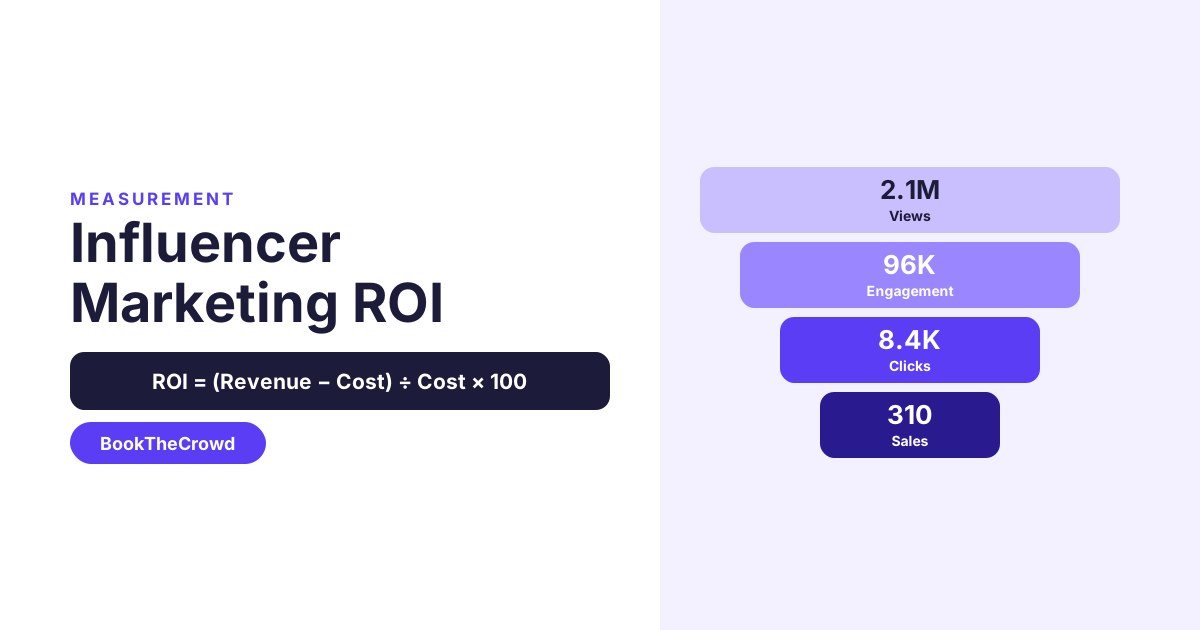
ROI = (Revenue from campaign − Total cost) ÷ Total cost × 100
Total cost should include creator fees, free products, shipping, ad spend used to boost posts, and your team's time if you can estimate it.
Example: you spend $2,000 on five micro creators. Their codes and links bring in $7,000 in sales.
ROI = ($7,000 − $2,000) ÷ $2,000 × 100 = 250%
That's a campaign worth repeating.
Step 5: Compare Creators Fairly
Don't judge creators on followers. Compare them on:
- Cost per view (CPV) = fee ÷ views
- Cost per engagement (CPE) = fee ÷ total engagements
- Cost per click (CPC) = fee ÷ link clicks
- Cost per acquisition (CPA) = fee ÷ sales or bookings
You'll often find a 20K micro influencer delivers cheaper sales than a 500K macro influencer. That's exactly the kind of insight that saves budget next time. Read more in micro vs macro influencers.
Step 6: Don't Forget the Hidden Value
Some returns don't show up in a spreadsheet right away:
- Content you can reuse as ads, on your website or in emails
- Search interest: more people Googling your brand name
- Social proof: reviews, tags and comments that help future buyers decide
- Long-term relationships with creators who become real fans
If you have usage rights, creator content can keep paying off for months.
Step 7: Build a Simple Report
After each campaign, make a one-page sheet with these columns for every creator:
- Creator name and platform
- Fee paid
- Views and engagement
- Link clicks
- Sales or bookings
- Cost per sale
Sort by cost per sale or cost per booking. Book the top performers again. Thank everyone. Drop the ones that didn't work.
After two or three campaigns, you'll have your own "dream team" of creators who reliably deliver. For budgeting, see our influencer pricing guide.
Make the First Step Easier
Good ROI starts with picking the right creators. On BookTheCrowd you can search creators by platform, followers, reach, category, location and language, so your budget goes to people whose audience actually matches your customer.
Find creators who deliver on BookTheCrowd
Frequently Asked Questions
How do you calculate influencer marketing ROI?
ROI = (revenue from the campaign − total cost) ÷ total cost × 100. Track revenue with UTM links, unique discount codes and customer surveys.
What is a good engagement rate for influencers?
It varies by platform and audience size, but smaller creators usually have higher engagement rates than large accounts. Compare creators within the same platform and tier.
What metrics should I track for influencer campaigns?
Reach, views, engagement rate, saves, link clicks, code uses, sales or bookings, and cost per result.
How long does it take to see results from influencer marketing?
Clicks and sales usually show within days of a post, but brand awareness and repeat purchases build over weeks and months.
Tags: influencer marketing ROI, influencer marketing metrics, measure influencer campaigns, engagement rate, UTM tracking, influencer KPIs
Find influencers, content creators and models on BookTheCrowd